



 UK
UK NL
NL IT
IT FR
FR ES
ES DE
DE AU
AU HR
HR AR
ARDigestive Enzymes for IBS: Do They Really Work?

Walk down the supplement aisle of any pharmacy, grocery store, or health food store and you’ll notice digestive enzymes taking up more and more shelf space. These products are often marketed as a solution for bloating, gas, heartburn, indigestion, food intolerances, and even low energy.
If you struggle with digestive symptoms, you may have wondered whether digestive enzymes could help—or perhaps a healthcare professional has already suggested them.
So, do digestive enzymes actually work?
The answer is: sometimes. It depends on the type of digestive enzyme, the symptom(s) you’re trying to treat, and whether you’re choosing a product that contains the right enzyme in a therapeutic dose.
As a gastrointestinal (GI) dietitian, I frequently see patients taking digestive enzyme supplements, and the results vary. Some can provide real symptom relief, while others make no difference in symptoms (often because they contain little to no active ingredient). In some cases, they may even worsen digestive symptoms.
Let’s break down what digestive enzymes are, who may benefit from them, and how to choose one wisely.
What Are Digestive Enzymes?
Digestive enzymes are proteins that help break down nutrients into smaller particles that can be more easily absorbed by the body. Think of them as a “lock and key” system—each enzyme is designed to break down a specific type of nutrient.
Your body naturally produces digestive enzymes throughout the digestive tract:
- Salivary glands produce amylase to begin carbohydrate digestion.
- The stomach produces pepsin and gastric lipase to begin protein and fat digestion.
- The pancreas produces the majority of digestive enzymes, including amylase, lipase, and proteases.
- The small intestine produces enzymes such as lactase, sucrase, and maltase to complete digestion before nutrients are absorbed.
Why Might Someone Benefit from Digestive Enzymes?
Some people do not produce enough of certain enzymes. This can occur anywhere along the digestive tract. For example, when certain carbohydrates are not fully broken down in the small intestine, they pass into the large intestine, where gut bacteria ferment them. This fermentation can lead to bloating, excess gas, abdominal discomfort, and changes in bowel habits.
Specific targeted digestive enzymes can help by breaking down these problematic nutrients.
Choosing the Right Digestive Enzyme
One of the biggest challenges is that there are hundreds of digestive enzyme products available online and at your local pharmacy and grocery store. Choosing the right one starts with identifying which foods trigger your symptoms.
Ask yourself:
- Do dairy products bother you?
- Do beans cause gas and bloating?
- Are garlic, onions, or wheat problematic?
- Do sugary foods, candy, or soda trigger symptoms?
- Do high fat, greasy foods cause stomach pain, oily, pale, or clay-colored stools?
- Please see our Intoleran test to help you identify your triggers Test
Different food intolerances require different enzymes. There is rarely a one-size-fits-all digestive enzyme, however Intoleran offers a variety of digestive enzyme blends such as Fodmix and Starchway that may treat FODMAP intolerances.
Comparing Digestive Enzymes
Over-the-Counter Products
OTC digestive enzymes can be helpful for specific food intolerances such as lactose intolerance or certain FODMAP sensitivities. However, evidence varies widely depending on the enzyme and product. Here are some common OTC digestive enzymes targeted for carbohydrate intolerances.
Lactase
- Breaks down lactose found in milk and dairy products.
- Helpful for people with lactose intolerance.
Alpha-Galactosidase
- Helps digest oligosacchardies, such as galactans and fructans found in beans, lentils, nuts, and cruciferous vegetables.
- Can reduce gas and bloating associated with these foods.
FODMAP Enzyme Blends
- Designed to target poorly absorbed carbohydrates found in foods such as garlic, onion, wheat, dairy, beans, and certain fruits.
- May be helpful for individuals with IBS or FODMAP sensitivities.
Amylase is an enzyme that helps your body break down carbohydrates. The pancreas and salivary glands in your mouth make amylase.
Glucoamylase is an enzyme that is involved in the breakdown of starch.
Maltase is a digestive enzyme produced in the small intestine that breaks down the disaccharide maltose into two glucose molecules, which can then be absorbed into the bloodstream.
Invertase is an enzyme that catalyzes the breakdown of sucrose (also known as table sugar) into the monosaccharides, glucose and fructose.
Cellulase- humans do not produce the enzyme cellulase. Plant based fiber usually pass through the gastrointestinal tract largely intact as they contain vital nutrients that feed our microbiome, help with regularity, and balance blood sugars. Cellulase is commonly marketed as a dietary digestive supplement to help break down fibrous plants making them easier to digest, however there are no evidenced based studies proving cellulase reduces bloating or gas.
For reference Intoleran Starchway Pro contains Invertase (17,000 u), Gluco-Amylase (60 AGU), amylase (30,000 DU) and Maltase (300 DP)
Digestive Enzyme Labels- What to Look For:
When evaluating a product, look beyond the ingredient list. The enzyme must be present in a sufficient quantity to break down the target food. This can be tricky based on different testing practices and in some cases may be absent on the ingredient label.
Enzyme activity of products should be measured and reported in FCC units on the food label. Here are common unit measurements to look for.
- Protease – HUT (Hemoglobin Unit Tyrosine base), USP
- Amylase – DU (Alpha-amylase Dextrinizing units)
- Lipase – FIP, LU, FCCLU
- Cellulase – CU (Cellulase unit)
- Invertase – IAU (Invertase Activity unit)
- Alpha- galactosidase – GALU
- Lactase – FCC
- Maltase – DP (degrees Diastatic power)
Unlike prescription medications, dietary supplements are not regulated by the FDA for potency or effectiveness before they reach the market.
Here is a side by side of some common digestive enzymes and a similar Intoleran product:
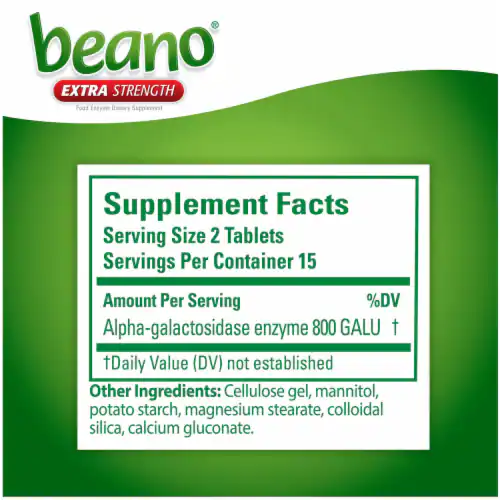
Beano contains 400GALU per tablet while Intoleran Fibractase contains 1200GALU and no mannitol (a high FODMAP ingredient-polyol).
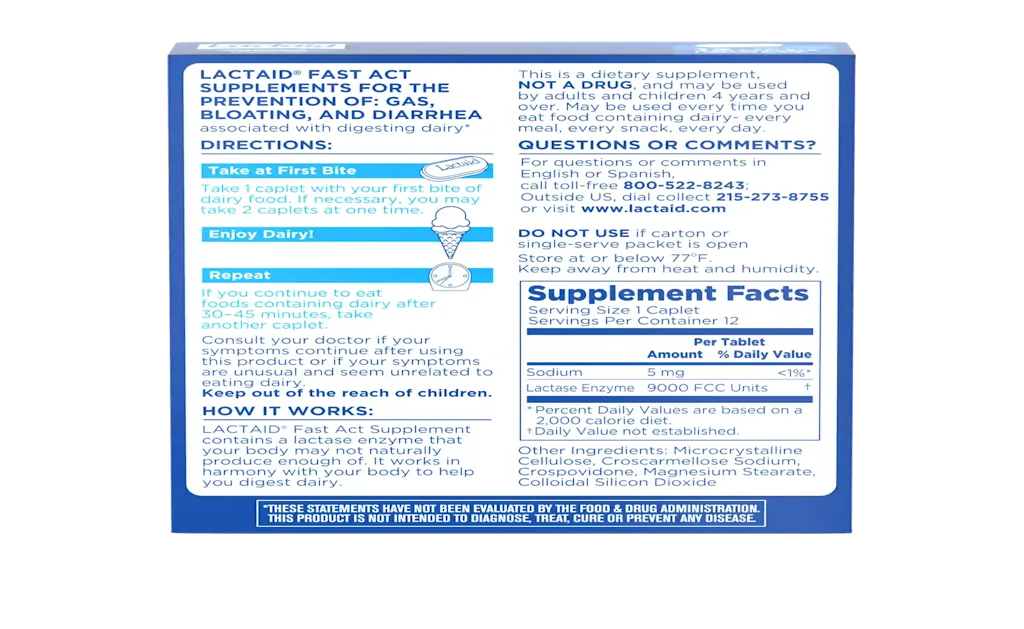
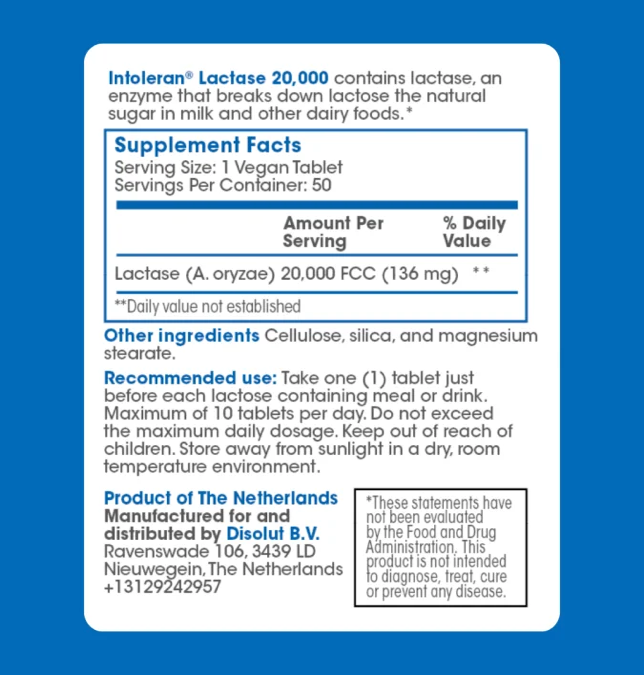
Lactaid Lactase enzymes contain 9,000 FCC units while Intoleran Lactase 20,000 contains 20,000 FCC units.
Watch Out for Hidden Ingredients
Ironically, some digestive enzyme supplements contain ingredients that may worsen digestive symptoms.
Chicory Root, Inulin, and Added Fibers- many over the counter digestive enzymes contain prebiotic fibers such as chicory root (derived from the inulin plant). While marketed as beneficial for gut health, these fibers can trigger bloating, gas, and abdominal discomfort in sensitive individuals, especially those with IBS.
Fructooligosaccharides- this prebiotic fiber can be spotted on many digestive enzymes and probiotics. This is a high FODMAP ingredient (fructan) that can trigger bloating, gas, and abdominal pain.
Sugar Alcohols- chewable digestive enzymes often contain sugar alcohols such as sorbitol, xylitol, maltitol, mannitol, isomalt, erythritol, and lactitol to improve taste by adding sweetness. These ingredients are poorly absorbed carbohydrates (polyols) and may contribute to:
- Bloating
- Gas
- Abdominal pain
- Diarrhea
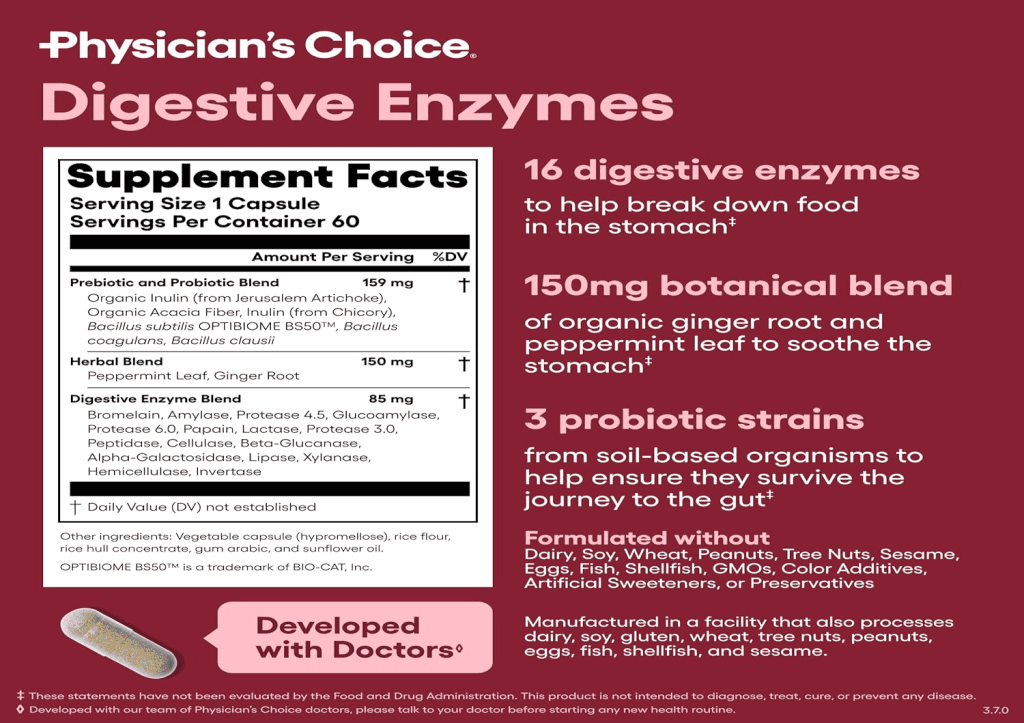
If you’re taking digestive enzymes to reduce symptoms, it’s worth checking the ingredient list for potential triggers. Check out this label, inulin if a high FODMAP ingredient (fructan) and the alpha- galactosidase content is not even listed.
Timing Is Everything
Even the best digestive enzyme won’t work if it’s taken incorrectly.
Digestive enzymes should be taken at the beginning of a meal or snack containing the trigger food or ingredient.
Most enzymes remain active for approximately 30–45 minutes. If you’re eating over a longer period, an additional dose is recommended.
You only need to take an enzyme when the trigger food is present.
For example:
- Take lactase with dairy products.
- Don’t take lactase if your meal contains no lactose.
Should You Eliminate Foods First?
Traditionally, GI dietitians often recommend a short-term elimination trial to identify food intolerances before introducing digestive enzymes. Examples may be a low FODMAP diet, gluten free, lactose free, or low histamine diet.
However, not everyone wants to significantly restrict their diet even for a short while.
In some cases, using a targeted digestive enzyme like Fodmix while monitoring symptoms can provide useful clues if a FODMAP intolerance is present. If symptoms improve after taking this enzyme with a FODMAP containing meal, it may suggest that FODMAP are contributing to your discomfort.
The Bottom Line
Digestive enzymes can be an effective tool for managing certain food intolerances and digestive symptoms—but only when the right enzyme is matched to the right problem.
Before purchasing a supplement:
- Identify your specific food triggers.
- Choose a product with clinically supported ingredients.
- Look for adequate enzyme potency.
- Avoid unnecessary additives that may worsen symptoms.
- Take enzymes at the start of meals containing the trigger food.
Most importantly, remember that more ingredients don’t necessarily mean better results. A targeted, evidence-based enzyme is often far more effective than a mismash supplement packed with unnecessary extras.
If you’re unsure which digestive enzyme is right for you, consult with a registered dietitian or healthcare provider experienced in gastrointestinal health.
This article is written by Guest Author Vanessa Vargas, RDN (Bend, Oregon USA)
Vanessa Vargas RDN, is a Registered Dietitian specializing in gastrointestinal nutrition, with expertise in irritable bowel syndrome (IBS), small intestinal bacterial overgrowth (SIBO), gastroesophageal reflux disease (GERD), inflammatory bowel disease (IBD), celiac disease, and other digestive disorders. With more than 20 years of experience, Vanessa provides evidenced based nutrition therapy and helps empower her clients to personalize their nutrition in a way that supports symptom relief, improves quality of life, and expands dietary variety—without unnecessary food restrictions. Having personally experienced IBS, she understands the physical and emotional impact digestive symptoms can have on daily life.
Visit her Website and Author Profile

