



 UK
 NL
 IT
 FR
 ES
 DE
 AU
 HR
 AR
Digestive Enzymes for Food Intolerances: How a Dietitian Uses Them
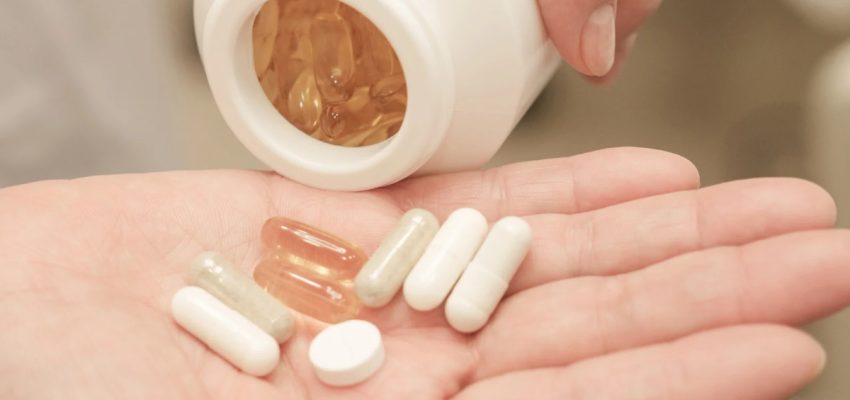
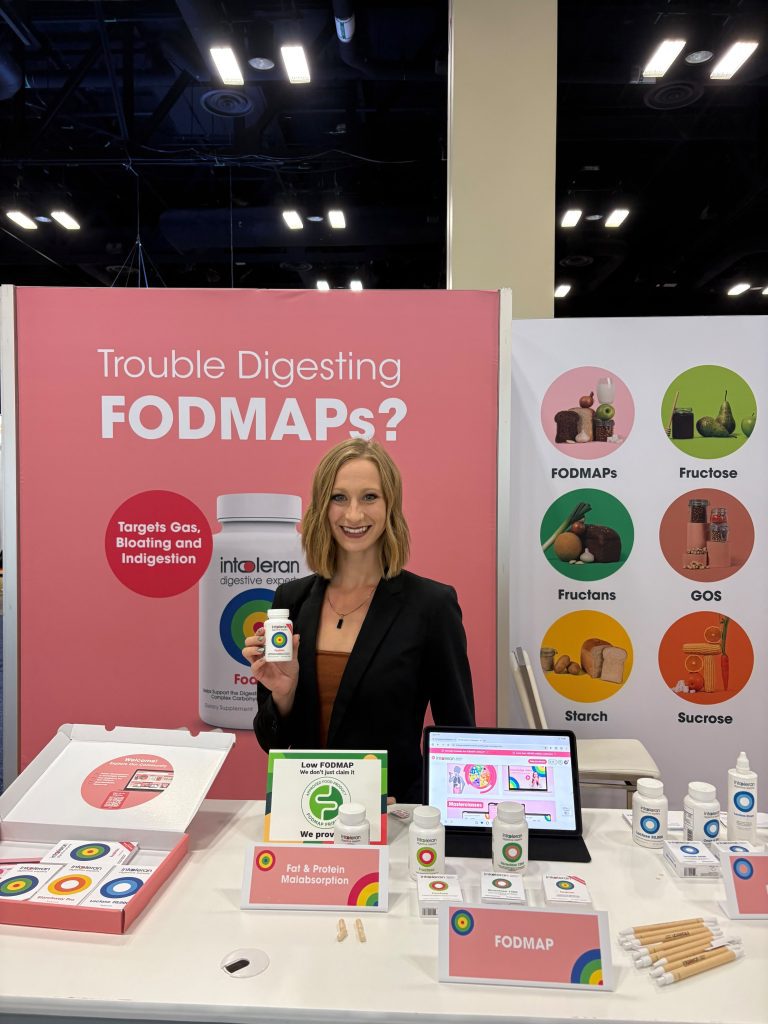
As an gut health dietitian who not only supports people with food intolerances, but has struggled with them myself, I know firsthand how easy it is to get stuck in the cycle of food restriction and long-elimination diets and the significant impact it can have on quality of life, social interactions, and food fears. When I had IBS, SIBO, and debilitating gut symptoms like abdominal pain and bathroom urgency, enzymes were the first supplement that finally helped to reduce my symptoms and enjoy food again. Now, I use them everyday with my patients and see similar, sometimes even life-changing results!
Elimination Diets
While elimination diets, like low FODMAP, can be helpful short term, they can backfire if done for too long by limiting vitamin, mineral and fiber intake and reducing microbiome diversity. I’ve seen people who have been on a low FODMAP diet for so long that their gut microbiome becomes compromised and it’s actually harder to finally expand their diet. Plus, who wants to eat a limited diet long term? Food isn’t just nutrients, it is a part of culture, community, comfort, and enjoyment!
Elimination diets should be a short term intervention to help calm down symptoms, give the gut a rest, and identify specific food triggers, with the goal of expanding one’s diet. Enzymes can be a great bridge to adding foods back in either instead of an elimination diet or during the reintroduction phase.
While they can both help with symptoms, neither elimination diets nor enzymes address the underlying cause of the food intolerances, so working with a healthcare provider specializing in gut health and nutrition is a key component of the process for a more robust, targeted approach for long term health.
How I use Enzymes
The way I use enzymes typically fall into three categories.
Eating in social settings: The scary unknown
For many people, the idea of going out to eat or trying to enjoy foods that were prepared by someone else can be daunting because you don’t have control or even knowledge of all the ingredients used. In these situations, taking an enzyme that covers several potentially triggering foods provides a lot of relief, confidence, and allows you to enjoy the meal without stressing about possible symptom flares.
This is perfect for going out to eat at restaurants, when traveling, or when eating meals at social gatherings.
When the trigger foods are still unknown
Taking enzymes with meals that have potentially bothersome foods and monitoring if symptoms improve can tell us a lot about the potential food triggers. If enzymes help, it tells us that these enzymes are helping to break down foods that the gut is struggling to digest on its own. From there, we can work backwards to figure out exactly which of those foods there is an intolerance to and implement targeted food swaps and enzyme use.
I use this strategy when I’m noticing patterns of food triggers and want to get confirmation that we’re headed in the right direction when an elimination diet doesn’t feel like a good fit.
During reintroduction of eliminated foods
Once all potentially triggering foods are removed and symptoms improve, the next step is to identify which of the foods are actually the bothersome ones. This is key because the goal is to expand the diet as much as possible and create food freedom and clarity helps us do just that.
Typically, after a month or so on an elimination diet, we add each potentially bothersome food group back in one by one. When a food is added that causes symptoms, we know which category of foods is causing the symptoms and can match the enzyme that helps to digest it. Moving forward, you know with confidence which foods need and don’t need the enzyme with a precise plan of action.
In my experience, this is the step of a low FODMAP or other elimination diet that a lot of people miss; but it’s an essential part of the process because this is where the long term improvement really begins. Without doing this step-by-step reintroduction, you may be stuck either 1) on a restrictive diet long term, 2) without clear answers on which foods are actually the bothersome ones, and/or 3) continuing to avoid all the food triggers and missing out all those delicious foods and important nutrients they provide.
Enzymes: The Lock & Key Analogy
Food intolerances occur when the body isn’t releasing enough of the enzymes on its own and, therefore, has a hard time breaking down one or more different types of molecules found in foods. Because enzymes work like a lock and key, there isn’t a one-size-fits-all option for taking digestive enzyme supplement. Each enzyme breaks down very specific molecules found in different foods.
Taking a digestive enzyme pill at the start of your meal allows them to break apart those troublesome molecules inside your gut. Essentially, they are replacing the enzyme that the body usually makes and releases during meals.
The important piece of the puzzle is to pair the right enzyme with each food intolerance. When paired correctly, this matching can improve or completely eliminate the reactions to these foods while still giving you the nutritional and gut benefits!
You may notice improvements in gas, burping, bloating, constipation, diarrhea, and abdominal pain. If you have a histamine intolerance you may also experience less fatigue, skin and sinus symptoms, and headaches. Your body will also be able to better absorb the nutrients in food because digestion is improved, so enzymes may help with unintentional weight and improving vitamin and mineral deficiencies – and their symptoms such as fatigue, brittle nails, hair thinning, and a weak immune system.
Addressing the Underlying Cause
One important caveat to understand is this: Taking enzymes does not address the underlying causes of the food intolerances. The question to ask is, “Why is my body having a difficult time digesting these foods?”
Working with a gut health dietitian and/or GI (gastrointestinal) doctor is an important part of the process to identify why the food intolerances developed to begin with and work together to address these issues. This could mean eliminating SIBO (small intestine bacterial overgrowth), putting Crohn’s or Ulcerative Colitis into remission, healing the gut lining, rebalancing the microbiome, addressing nervous system dysfunction, supporting the pancreas, or addressing other common causes that are relevant for you uniquely. There are tests available to help you identify which underlying causes are contributing to your symptoms uniquely.
When you take this upstream, root cause approach, you may even be able to get rid of the food intolerances altogether! That means, no more symptoms AND no need to take enzymes anymore!
Finding the Right Enzyme(s)
Going back to our lock and key analogy, let’s explore a few common food intolerances and which enzymes break them down. Remember, these foods aren’t inherently bad and contain important nutrients, which is why we want you to be able to enjoy them, symptom free!
Lactose -> Lactase and Once a Day.
Lactose is the fermentable sugar (FODMAP) in dairy products and is present in high amounts in milk, cream, unfermented cottage cheese and soft cheeses. Lactose is found in much smaller amounts in butter, aged (hard) cheeses, yogurt (especially Greek yogurt), fermented cottage cheese, and baked goods – such as pastries, desserts and bread – that have these ingredients.
Products:
- Lactase pills can be taken when you eat these foods and work to break down lactose inside your gut so you can absorb it.
- Lactase drops can be added to milk itself at least 24 hours before baking with it or drinking it. This makes regular milk almost completely lactose-free.
- Intoleran’s Once a Day is a pill that, when taken on a daily basis, provides probiotics that support better lactose digestion, without using enzymes.
- Fodmix is a blend of enzymes that breaks down several high FODMAP foods and molecules including lactose. More on this product is below.
Fructose -> Fructase
Fructose is the FODMAP sugar found in some fruits and vegetables – including watermelon, mango, apples and asparagus – as well as some processed and packaged foods including honey and those with high fructose corn syrup.
Products:
- Fructase pills can be taken when you eat these foods.
- Fodmix is a blend of enzymes that breaks down several high FODMAP foods and molecules including fructose. More on this below.
Fructans -> Fibractase
Fructans are a FODMAP carbohydrate found in grains such as wheat, barley, and rye; certain vegetables including garlic, onions, brussel sprouts and cabbage; fruits including watermelon and grapefruit; nuts like cashews and pistachios; and beans, chickpeas, and lentils. While fructans are a common trigger for many people with sensitive guts, they actually feed beneficial bacteria in the gut, so eating them on a regular basis is important!
Products:
- Fibractase pills can be taken when you eat these foods.
- Fodmix is a blend of enzymes that breaks down several high FODMAP foods and molecules including fructans. More on this below.
Galactans – > Fibractase
Galactans (also called GOS), are a FODMAP carbohydrate found in large amounts in cashews, pistachios, beans, chickpeas, lentils, peas, soybeans and soy containing products such as soy milk and tofu.
The human gut doesn’t actually make enzymes to break down galactans. This is because the bacteria in our gut ferment and break them down for us. While this process can be good for the microbiome, many people find that it causes unpleasant symptoms.
Products:
- Fibractase pills help to digest galactans as well as fructans and can be taken when you eat these foods.
- Fodmix is a blend of enzymes that breaks down several high FODMAP foods and molecules including galactans.
Starch and Sucrose -> Starchway
Starch is a complex carbohydrate found in potatoes, grain products, and pasta while sucrose is a simple carbohydrate found in products that contain table sugar and certain fruits such as watermelon, bananas, and oranges. Carbohydrates often get a bad rap, but many of these foods are rich in vitamins, minerals, and fiber making them a great addition to most diets.
People with Sucrase Isomaltase Deficiency (SID) don’t have enough of the enzymes to digest these foods and need support with enzyme therapy.
Products:
- Starchway pills help to digest starch and sucrose when you eat these foods.
- Starchway Pro is a more concentrated dose of enzymes for people who want even more support with fewer pills.
- Carbostarch is an enzyme blend to help break down starch and sucrose plus lactose, galactans, and fructans. This is a great option for people who have SID plus intolerances to complex carbohydrates and/or lactose.
- Fodmix is an enzyme blend that helps to break down sucrose (table sugar), lactose, and some complex carbohydrates. It does not help with starch digestion. This is a great option for people without SID who have a hard time digesting table sugar as well as FODMAPs.
Fodmaps -> Fodmix
Enzyme blends can be incredibly beneficial and efficient because many people with sensitive guts have multiple food intolerances at once since they can have the same underlying causes. You’ll also notice that several of the food categories above have overlap in the foods on the list. For example, beans have high levels of both fructans and galactans.
Many FODMAP enzymes available today don’t help with all FODMAP intolerances. However, Intoleran’s Fodmix is comprehensive and helps to break down almost all of the FODMAPs at once including lactose, fructans, sucrose, galactans, and fructose (which many other products miss). The only FODMAP it doesn’t help to digest is polyols because there are no enzymes for them in the body or in supplement form.
Fodmix is my go-to recommendation for people with multiple or unknown food intolerances because it is broad-spectrum and covers so many foods in just one pill. No need to bring multiple single enzyme bottles! It’s perfect to keep in your bag when traveling, going out to eat, holidays, and mixed dishes, especially when you can’t control or don’t know all the ingredients.
However, if you already know that you have only one food intolerance, not multiple, then you can instead take just the one targeted enzyme you need instead of a blend like Fodmix.
How and When to Take Digestive Enzymes
Remember, enzymes work with the foods you take it with and don’t carry over to other meals. You can take them as often as you need, up to 15 pills per day.
Take 1-3 capsules with the first bite of your meal, depending on the amount of these foods you need support with. For example, you may only need 1 with a small snack and 3 with Thanksgiving dinner or when dining out. If your meal continues for more than 30-45 minutes, or you have a snack or dessert after that time frame, take another pill(s) as needed.
If it is difficult to swallow, open the capsule and add the contents to water for adults and children ages 2 and up.
Fats -> Lipase Mix
Dietary fats are found in nuts, seeds, egg yolks, avocado, oil, fried foods, butter, and full fat dairy products such as milk and cheese.
Products:
- Lipase Mix is a blended enzyme that helps with digestion of dietary fat, protein, and some carbohydrates
- Enzymix also helps to break down fat in meals.
Protein -> Enzymix
Protein is in meat, fish, beans, tofu, and nuts; because most meals with protein also contain fat and carbohydrates, a blended enzyme mix can be a great fit.
Products:
- Enzymix helps with digestion of protein, fats, carbohydrates, and some FODMAPs such as lactose, galactans and fructans.
Histamine -> DAO and Cozidase
Histamine is a natural signaling molecule that our bodies make and is naturally found in some foods, especially leftovers and fermented or aged foods and drinks such as hard cheese, yogurt, wine, and beer.
When the body can’t break down histamines as fast they build up, symptoms can occur all over the body including gas, bloating, diarrhea, itchy skin, stuffy nose, and headaches.
Products:
- DAO Mini contains the naturally occurring enzyme in the body that breaks down histamine and can be taken right before you eat high histamine foods for immediate support, up to 3 times daily.
- DAO Plus contains the DAO enzyme plus antioxidants vitamin C and quercetin that can also help. Take right before high histamine meals.
- Cozidase contains nutrients that help the body make more DAO on its own for long term improvement. Cozidase does not have the immediate effect of taking DAO Mini or DAO Plus. Take 1 pill twice a day with meals. You can take it with or without DAO mini as needed.
Why I Choose Intoleran

As a healthcare provider, I need to know exactly what is in each supplement I recommend and ensure that the company is reputable, the ingredients are clean, and that the dosing and delivery are easy for my patients. That’s exactly why I love Intoleran!
All their products have the exact doses listed – you’d be surprised how unique this is because many companies use “proprietary blends” without clear dosages. The transparency allows me to be specific with my recommendations for each person individually.
Intoleran also has clean formulations without common allergens such as soy, gluten, and animal derivatives. Any products with these exceptions have them clearly listed on the label, so we can choose which products are appropriate based on each person’s personal preferences and allergies. This also makes them suitable for people who feel like they react to everything, even small amounts of additives.
The dosing flexibility and delivery method is key as well. Intoleran tablets are scored and can be easily cut, drops can be added to fluids and capsules can be taken discretely instead of mixing a powder into food. For anyone needing extra support, multiple tablets and capsules can be taken at once, several times per day. For anyone with difficulty swallowing, capsules can be opened and added to water – a great option for ages 2 and up!
Finally, Intoleran was built by healthcare professionals for healthcare professionals. They focus heavily on supporting dietitians and other providers by speaking directly with them at conferences and in their practices, through their on-demand trainings on their online professional community, and offering one-on-one case consults.
How to Get Started with Enzymes
Know your food triggers?
If you already know which foods are bothersome for you, can you select the single enzyme or blended formula that covers those foods using the Intoleran wheel or quiz. Take 2-3 enzymes with your first bite of a normal or large meal that contains those foods. You can take just 1 with a snack.
While many people see improvements immediately, do this consistently for 2 weeks before deciding if you need to change your dose. If your symptoms are largely resolved, you can try decreasing the number of pills at each meal because you may not need as many pills. The goal is to find the sweet spot of relief along with fewer pills.
If you still experience symptoms after meals or the next day after the 2 week trial, try increasing the dosage to 3 with meals and 2 with snacks. If that still doesn’t alleviate your symptoms, you may have another food intolerance that the enzyme isn’t helping with or have other underlying causes of your symptoms. See if you can identify another food trigger and try an enzyme for it. If you get stuck, reach out to a gut health dietitian to help.
Don’t know your food triggers?
If you don’t know all your trigger foods, I recommend taking a blended enzyme with each meal when you first get going since many people have multiple food intolerances. My first go-to with patients is either Fodmix or Enzymix because they cover the broadest range of common food intolerances and are great for every day meals with multiple ingredients and dining out. Look at the foods that each formula covers, and select the best fit.
For 2 weeks, take 2-3 enzymes with every meal and 1 with each snack before deciding if you need to change the formula or dose. If your symptoms are largely resolved, you can try decreasing the dosage at each meal to find the sweet spot of relief with the fewest necessary pills.
If you still experience symptoms after meals or the next day after the 2 week trial, try increasing the dosage to 3 with meals and 2 with snacks. If that still doesn’t alleviate your symptoms after another week, you may have another food intolerance that the enzyme isn’t helping with or have other underlying causes of your symptoms. See if you can identify another food trigger and try an enzyme for it for another 2 weeks.
If you get stuck or want more support with where to start, reach out to a gut health dietitian who can guide you through the process and help you select the best enzyme while supporting you with your overall gut health and diet optimization.
Final Thoughts
Enzymes are a tool on the journey to helping to restore balance to your gut and body. They can help you eat more foods without the unpleasant symptoms, get more nutrients from your plate, have more confidence and predictability with your body, and enjoy eating your favorite foods with your favorite people again!
Remember, enzymes work like a lock and key with each enzyme helping to break down certain molecules so your body can better digest and absorb the nutrients, minimizing or eliminating symptoms altogether. As such, there is not a one-size-fits-all enzyme. Understanding your food triggers will allow you to use the one(s) that will be most effective for your unique food intolerance(s).
At the end of the day, enzymes are a tool to help you enjoy food again. While creating a bigger ‘safe’ food list, we don’t want you to needlessly create a bigger supplement shelf. Understanding the causes of your food intolerances may actually help you digest these foods normally on your own again, without the need for supplement support.
If you aren’t sure where to start or you’ve been taking enzymes regularly for at least 2 weeks and aren’t noticing any benefits, a gut health dietitian can help. Working with a healthcare provider can also help you find and address the underlying causes of your food intolerances and ultimately wean off enzymes. As a functional medicine dietitian, I use enzymes with my patients every day, and my goal is that they will no longer need them by the time we are done working together!
This article is written by Kaytee Hadley MS, RDN, LD, IFMCP, Functional Medicine Dietitian, Founder Integrative Center for IBS and SIBO
After struggling with unexplained and debilitating gut symptoms for 15 years, Kaytee changed career paths to find answers for herself and is now dedicated to sharing them with others. She and her team help people with chronic and complex digestive problems uncover and address the root causes of digestive issues through testing and personalized care, integrating nutrition, lifestyle, and targeted supplementation. As a trusted voice in the media, Kaytee has been featured in Time, Forbes, and MedicalNews Today and appears regularly on broadcast TV.
Check Author Bio